
Blogs
Sciatica and Piriformis Syndrome in Runners: Key Differences
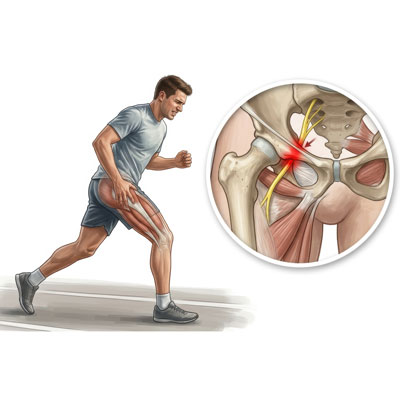
Sciatica and piriformis syndrome in runners can both cause pain that starts in the buttock and travels down the leg. Although they can feel similar, the source of the pain is different.
As a provider of chiropractic care in Irvine, CA, we look beyond where you feel the pain to understand what may be contributing to your symptoms.
What is sciatica in runners?
Sciatica describes symptoms caused by irritation or pressure affecting the sciatic nerve or the nerve roots that form it. The sciatic nerve runs from the lower back through the buttock and down each leg.
For runners, symptoms may become more noticeable during training, after a run, or after sitting for a long period.
Where sciatic pain comes from
Sciatic pain often begins with a problem involving nerves in the lower spine. A herniated disc, spinal stenosis, or other changes around the spine can irritate or put pressure on a nerve.
This is why sciatica is not simply a tight muscle in the leg. The pain you feel farther down the leg may be connected to nerve irritation closer to your lower back.
Understanding the difference between a pinched nerve and sciatica can also help explain why nerve symptoms may appear in different areas.
Common sciatica symptoms in runners
Sciatica can affect each person differently, but common symptoms include:
- Pain that travels from the lower back or buttock into the leg
- Burning or electric like pain
- Tingling or numbness
- Weakness in the affected leg or foot
- Symptoms that usually affect one side
Some runners have lower back pain along with leg symptoms, while others mainly notice pain in the buttock, thigh, calf, or foot.
What is piriformis syndrome in runners?
Piriformis syndrome occurs when the piriformis muscle in the buttock irritates or puts pressure on the sciatic nerve. Because the same nerve is involved, the symptoms can look similar to sciatica caused by a lower back problem.
You may feel deep pain in the buttock, along with tingling or numbness that travels down the back of the leg. Symptoms may become more noticeable during or after running.
The role of the piriformis muscle in running
The piriformis is a small muscle located deep in the buttock. It helps move the hip and contributes to stability when you walk and run.
Running repeatedly loads the muscles around the hips and pelvis. Changes in training volume, intensity, or movement patterns may place additional stress on this area. This does not mean running always causes piriformis syndrome, but training may aggravate an already irritated area.
How the piriformis can irritate the sciatic nerve
The sciatic nerve passes close to the piriformis muscle. When the area becomes irritated, nearby nerve tissue may also be affected.
Symptoms may become more noticeable while running, climbing stairs, or sitting for a long time. This overlap with sciatic nerve symptoms is one reason piriformis syndrome can be difficult to distinguish from sciatica caused by a lower back problem.
Sciatica vs piriformis syndrome in runners
The biggest difference is where the nerve irritation begins. With sciatica related to the spine, the source is usually around the lower back. With piriformis syndrome, the problem is around the piriformis muscle in the buttock.
The following patterns may provide useful clues:
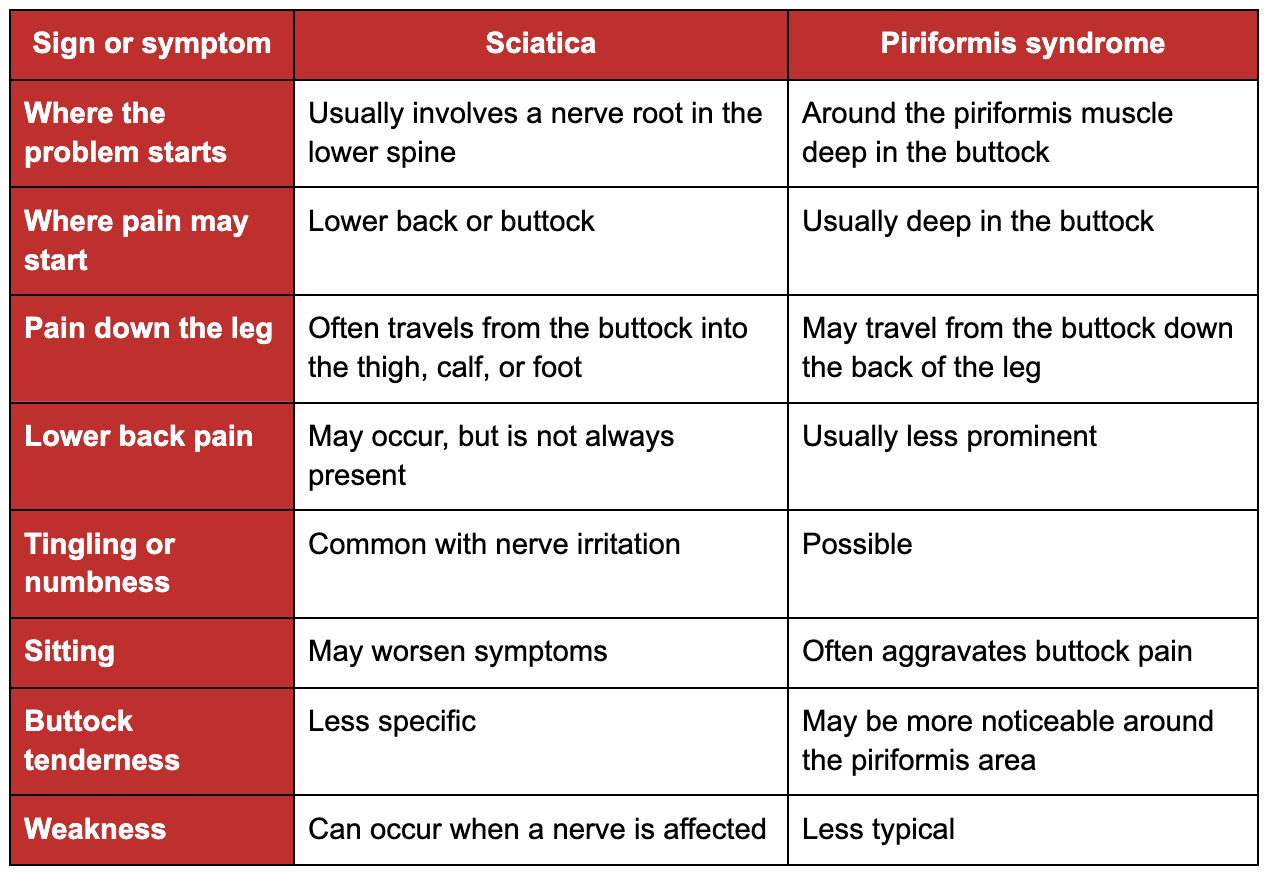
These differences can point you in the right direction, but symptoms alone cannot confirm what is causing your pain. Piriformis syndrome can be difficult to diagnose because several lower back, hip, and nerve problems can produce similar symptoms.
Why runners develop sciatica or piriformis symptoms
Running does not always cause either condition. However, training habits and existing problems can influence when symptoms appear. Common factors may include:
- Increasing mileage too quickly: A sudden jump in running volume gives your body less time to adapt.
- Increasing speed or hill training: Changes in training intensity can place different demands on the hips and lower body.
- Repetitive loading: Running repeats similar movements many times, which can aggravate an already irritated area.
- Hip and glute muscle overload: Fatigue or changes in how these muscles work may affect movement around the pelvis.
- Changes in running mechanics: The way your hips, pelvis, and lower body move can influence how forces are distributed.
- Existing lower back problems: Disc or spinal problems may already be irritating a nerve before running makes symptoms noticeable.
- Long periods of sitting: Sitting between workouts may aggravate symptoms, especially when buttock or leg pain is already present.
The important question is not simply whether running caused your pain. We want to understand what structure is irritated and why certain activities make your symptoms worse.
What your pain during and after running may tell you
When your pain occurs can provide useful clues, but timing alone cannot confirm whether you have sciatica or piriformis syndrome. Look for patterns in when and where your symptoms appear.
- Pain while running: Pay attention to where the pain begins and whether it stays in one area or travels down the leg. Tingling, numbness, or increasing weakness may suggest nerve involvement and should not be brushed off as normal muscle soreness.
- Pain after running: Symptoms that appear after a run may be related to how your body responds to repeated loading. Notice whether the pain tends to follow longer distances, speedwork, hills, or sudden increases in training. These patterns can help identify what may be aggravating the area, but they cannot determine the cause on their own.
- Pain after sitting: Prolonged sitting can aggravate both conditions. Deep buttock pain that becomes more noticeable while sitting can occur with piriformis syndrome, while certain sitting positions may also aggravate symptoms related to the lower back. The response to sitting is a useful clue, not a diagnosis.
The bottom line: Sciatica and piriformis syndrome share many symptoms. No single movement, activity, or home test can reliably tell them apart. An evaluation may be needed to determine where the pain is coming from.
Should you keep running with sciatica or piriformis pain?
You do not always need to stop all physical activity because of mild discomfort. However, repeatedly running through worsening nerve symptoms is not a good recovery strategy.
Consider reducing or modifying your training if running clearly increases your pain. You may need to temporarily adjust your mileage, intensity, hills, or other activities while you determine what is causing the symptoms.
Be especially cautious if you notice increasing numbness, tingling, weakness, or pain traveling farther down the leg.
Your recovery plan should also match the underlying problem. For example, exercises appropriate for sciatica from a herniated disc may not address every cause of buttock or leg pain.
When runners should get nerve pain evaluated
Consider getting evaluated if your symptoms keep returning each time you run, continue despite reducing your training, or begin interfering with everyday activities.
An evaluation is also important if:
- Pain starts traveling farther down your leg
- Numbness or tingling persists
- You notice weakness in your leg or foot
- Sitting or walking becomes increasingly difficult
- Your symptoms continue to worsen
Seek prompt medical attention for severe or rapidly increasing weakness, loss of bladder or bowel control, numbness around the groin or saddle area, or significant symptoms following a serious injury.
A sports focused approach to nerve pain at Zen Care
At Zen Care in Irvine, care for running related pain is led by Dr. Jay Kang, who brings more than a decade of experience in chiropractic care and sports medicine. His experience includes working with professional and competitive athletes, including MLB players, UFC fighters, Olympic athletes, and NCAA athletes.
That experience matters when symptoms such as buttock pain, tingling, or leg pain appear during running. Rather than assuming that pain traveling down the leg is always sciatica, we consider your lower back and hip function, movement patterns, training history, and signs of nerve involvement.
When appropriate, our evaluation may also include digital X-rays and posture analysis. Based on what we find, we can develop a personalized care plan using chiropractic care and other supportive therapies available at our Irvine clinic.
If pain, numbness, or tingling keeps interfering with your runs or daily activities, you can contact us to schedule an evaluation with our team.
Frequently asked questions
Can running make sciatica worse?
Yes. Running may aggravate sciatica if it increases irritation around an affected nerve. If symptoms worsen during or after running, consider modifying your training and getting persistent symptoms evaluated.
Can I keep running with piriformis syndrome?
It depends on your symptoms. Mild activity may be possible, but continuing to run when pain, numbness, or tingling is getting worse can aggravate the problem.
How can I tell if my pain is sciatica or piriformis syndrome?
Sciatica often involves a nerve problem originating in the lower back, while piriformis syndrome begins around the buttock. Because symptoms overlap, an evaluation may be needed to identify the source.
How long does piriformis syndrome last in runners?
Recovery time varies depending on the cause, severity, training load, and treatment. Symptoms that persist or repeatedly return during running should be evaluated.
Does sitting make sciatica or piriformis syndrome worse?
It can. Prolonged sitting may aggravate both conditions. Deep buttock pain while sitting is common with piriformis syndrome, but it does not confirm the cause on its own.