
Blogs
6 Exercises for Sciatica from a Herniated Disc
Exercises for sciatica from a herniated disc should focus on how your symptoms respond to movement, not on how difficult an exercise feels. For some people, the right movement may help pain move out of the leg and closer to the lower back.
This response is known as centralization and can help guide which movements may be appropriate. A Chiropractor in Irvine CA can also evaluate how your symptoms respond to movement when sciatica persists or keeps returning. Below are six gentle exercises that focus on spinal movement, nerve mobility, and muscle control without forcing your lower back through pain.
Why a herniated disc causes sciatica
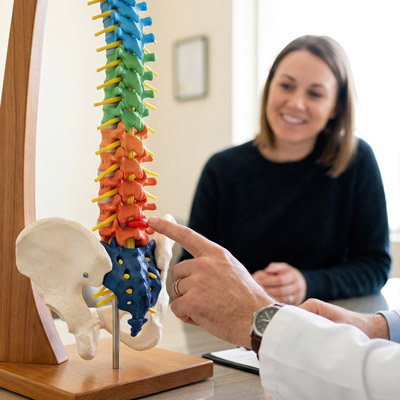
Each intervertebral disc sits between two bones of the spine like a cushion with a soft centre. When the outer wall tears, some of that centre pushes out.
If the bulge lands near a nerve root in your lumbar spine, it creates pressure on the affected nerve. Those roots feed the sciatic nerve, which runs down through the buttock and into the leg, which is why lower back pain caused by a herniated disc shows up below the knee.
The result is sciatica: burning or shooting pain down one leg, often with numbness or tingling in the foot. Some people get a tingle in the toes and no back ache at all. Because similar symptoms can also occur when a nerve is compressed or irritated, understanding the difference between a pinched nerve and sciatica can help clarify what may be causing your symptoms.
The rule that tells you an exercise is working
Watch where your pain moves, not just how much it hurts.
If pain starts to leave your calf or leg and moves closer to your lower back, this is called centralization. It can be a positive sign that the movement is helping. On the other hand, if pain begins traveling farther down your leg, known as peripheralization, stop that movement.
Also stop if you notice increasing numbness, tingling, or new weakness. How your symptoms respond to an exercise matters more than completing a certain number of repetitions.
6 exercises for sciatica from a herniated disc
Move slowly and pay attention to how your symptoms respond. None of these stretches and movements should be forced. If an exercise causes pain to travel farther down your leg or increases numbness or tingling, stop that movement.
The exercises below focus on three goals: encouraging comfortable spinal movement, strengthening the muscles that support the lower back, and improving sciatic nerve mobility.
1. Prone press up
Prone press ups are commonly used in the McKenzie method. For some people with disc related sciatica, this movement may help bring pain out of the leg and closer to the lower back.
- Lie face down and allow your lower back to relax.
- Start by resting on your elbows and forearms.
- If this position feels comfortable, place your hands under your shoulders.
- Slowly press your upper body upward while keeping your hips relaxed and down.
- Move only as far as you can without increasing symptoms in your leg.
- Slowly lower yourself back to the starting position.
Complete a set of 10 slow press ups, two to three times throughout the day. Do not force your lower back into a deep arch. If your leg pain moves farther down the leg, stop the exercise.
2. Standing back extension
Standing back extensions use a similar direction of movement as the prone press up but can be performed when lying down is uncomfortable or impractical.
- Stand upright with your feet comfortably apart.
- Place your hands on your hips or lower back.
- Gently lean your upper body backward.
- Stay within a comfortable range of motion.
- Slowly return to the starting position.
Try 10 gentle extensions at a time, repeating the exercise two or three times during the day. The goal is controlled extension, not bending backward as far as possible. Stop if the movement increases pain, numbness, or tingling in your leg.
3. Pelvic tilt with gentle curl up
This exercise combines a pelvic tilt with a small curl up to engage the abdominal muscles that help support the lumbar spine.
- Lie on your back with your knees bent and feet flat on the floor.
- Gently tighten your abdominal muscles.
- Flatten your lower back toward the floor.
- Keeping your lower back controlled, slowly lift your head and shoulders slightly from the floor.
- Hold briefly, then lower yourself back down.
- Relax and return to the starting position.
Do 10 controlled repetitions, pausing for about 2 seconds at the top of each movement. Keep the movement small and controlled. You do not need to perform a full sit up. Stop if curling forward increases your lower back or leg symptoms.
4. Prone arm and leg lift
This exercise works the back, abdominal, hip, and trunk muscles while asking you to keep your spine controlled.
- Lie face down with your arms extended in front of you.
- Gently engage your core.
- Slowly raise one arm and the opposite leg slightly from the floor.
- Keep your hips and trunk as still as possible.
- Hold briefly, then slowly lower your arm and leg.
- Repeat with the opposite arm and leg.
Hold each lift for about 3 seconds before switching sides, aiming for 10 repetitions on each side. Focus on control rather than lifting your arm or leg as high as possible. The movement should not increase pain traveling down your leg.
5. Single leg raise
A single leg raise can help strengthen the abdominal muscles while teaching you to keep the lower back stable during leg movement.
- Lie on your back with one knee bent and the other leg straight.
- Gently tighten your abdominal muscles.
- Keep your lower back in a comfortable, controlled position.
- Slowly raise the straight leg a short distance from the floor.
- Hold briefly, then lower it back to the starting position.
- Repeat with the other leg.
Repeat the movement 10 times with each leg, keeping each raise steady for about 2 seconds before lowering. Keep the movement slow and avoid lifting the leg higher if doing so causes your lower back to arch or increases sciatic pain.
6. Sciatic nerve glide
A sciatic nerve glide is different from a deep hamstring stretch. The goal is to move the sciatic nerve gently through its normal path rather than hold it under strong tension.
- Sit upright near the edge of a chair.
- Slowly straighten the affected leg in front of you.
- As the leg straightens, gently bring your toes toward you.
- Return your foot to the floor and relax.
- Repeat the movement slowly without holding a deep stretch.
Move smoothly through 10 repetitions on the affected side, without holding the leg in the stretched position. The movement should feel gentle and controlled. Do not try to stretch as far as possible. Stop if pain begins traveling farther down your leg or if numbness or tingling increases.
Movements that often aggravate the condition
While symptoms are active, park these:
- Deep forward bending, such as touching your toes or folding forward while seated
- Sit ups and crunches
- Heavy deadlifts or squats
- Twisting your body while your lower back is rounded
- Long stretches of sitting, which raises pressure on the discs more than standing
When to stop exercising and get your sciatica checked
Stop exercising and seek prompt medical care if you develop numbness around the groin or inner thighs, changes in bowel or bladder control, worsening leg weakness, symptoms in both legs, or difficulty lifting your foot while walking. These symptoms are uncommon but may signal serious nerve compression.
If your sciatica is not improving, keeps returning, or makes it difficult to sit, walk, or complete daily activities, it may be time to have your spine evaluated. An assessment can help determine whether a herniated disc or another problem is irritating the nerve and whether your exercise plan needs to change.
Getting a sciatica care plan at Zen Care
These exercises can be helpful, but sciatica from a herniated disc can affect each person differently. If your symptoms are not improving, keep returning, or get worse with certain movements, an evaluation can help us understand what may be irritating the nerve and which approach may be appropriate for you.
At Zen Care in Irvine, we may use chiropractic care, spinal decompression, and other treatment options based on your symptoms and individual needs. If home exercises are not providing enough relief, contact us to discuss your symptoms and next steps.
Frequently asked questions
How long before these exercises reduce pain?
Many people notice leg pain centralizing within one to two weeks of daily practice. Lasting pain relief usually takes four to six weeks alongside changes to sitting and lifting habits.
Can these exercises make a herniated disc worse?
Not if you follow the centralizing rule and stop anything that pushes pain further down the leg. Forcing range of motion through nerve pain causes trouble, not the movements themselves.
How long does sciatica from a herniated disc take to improve?
Most cases settle with conservative care over six to twelve weeks, though leg pain often eases sooner. Symptoms that worsen, or that have not budged in three weeks, should be assessed rather than waited out.
Is walking good for sciatica from a herniated disc?
Yes for most people, since gentle walking improves blood flow and reduces stiffness without loading the spine the way sitting does. Start short and build up as the leg settles.