
Blogs
7 Alternatives to Therapy That Can Improve Your Mental Health (Backed by Experts)

Let’s be honest – therapy isn’t always an option. Whether it’s the cost, the waitlist, or simply not feeling ready, many people are searching for other ways to improve mental health without a weekly appointment.
The good news? Science backs several accessible, everyday approaches that can genuinely make a difference. And some of them might surprise you.
Here are 7 expert-supported alternatives – plus one often-overlooked option we’ll cover at the end.
7 Alternatives That Can Improve Your Mental Health
1. Mindfulness & Meditation Practices
Mindfulness isn’t just a buzzword – it’s one of the most well-researched tools available for stress and anxiety. Even 10 minutes a day can rewire how your brain responds to pressure.
Dr. Jon Kabat-Zinn, founder of Mindfulness-Based Stress Reduction (MBSR), demonstrated in research published in General Hospital Psychiatry that structured mindfulness practice significantly reduced anxiety, depression, and chronic pain symptoms.
Where to start:
- Apps like Calm or Insight Timer (free options available)
- 5-minute breathing exercises before bed
- Body scan meditations during lunch breaks
2. Physical Activity & Movement
Exercise is, without question, one of the most powerful natural mood boosters we have. Movement triggers the release of endorphins, reduces cortisol, and improves sleep – all of which directly support mental wellness.
A landmark study by Dr. James Blumenthal, published in the Archives of Internal Medicine, found that regular aerobic exercise was just as effective as antidepressants for treating mild to moderate depression.
You don’t need a gym membership. Walking 30 minutes daily, yoga, or even dancing in your living room counts.
3. Journaling & Self-Reflection
Writing is thinking made visible. When we get our thoughts out of our heads and onto paper, we create distance from them and that distance reduces their power over us.
Dr. James Pennebaker, a psychologist at the University of Texas, found in multiple studies that expressive writing about difficult experiences led to measurable improvements in both psychological and physical health.
Try this: write freely for 10 minutes each morning, no editing, no judgment. Just let it out.
4. Peer Support Groups
There’s something quietly powerful about being in a room (or a Zoom call) with people who truly understand what you’re going through. Peer support groups reduce isolation, normalize struggle, and create accountability.
Research published in the American Journal of Psychiatry by Dr. Larry Davidson confirmed that peer support significantly improved self-reported mental health outcomes and reduced hospitalization rates for people with mental health conditions.
Look for local community groups, online forums, or condition-specific communities on platforms like Reddit or Facebook.
5. Creative Outlets (Art, Music, Writing)
Creativity gives emotion somewhere to go. Whether you’re painting, playing guitar, or crafting short stories, engaging in creative work activates parts of the brain associated with reward and self-expression.
You don’t have to be good at it. You just have to do it.
6. Spending Time in Nature
Nature is medicine and it’s free. Time outdoors lowers cortisol, reduces rumination, and restores attentional focus in ways that urban environments simply can’t replicate.
Dr. Gregory Bratman at Stanford published findings showing that a 90-minute walk in nature significantly reduced neural activity in the brain’s region linked to negative, repetitive thoughts – a key driver of anxiety and depression.
Even 20 minutes in a park can shift your mental state. Make it a daily habit, not a weekend treat.
7. Mental Health Coaching or Self-Help Resources
Therapy isn’t the only structured option. Mental health coaches, evidence-based self-help books, and online programs can provide real frameworks for managing stress, building resilience, and shifting unhelpful thought patterns.
Where Chiropractic Care Fits In (And Why It’s Often Overlooked)
Most people think chiropractic is about back pain. And while we absolutely help with that – the connection between spinal health and mental wellness runs deeper than most people expect.
Chiropractic Is Not Just About Back Pain
Your spine houses the central nervous system – the communication highway between your brain and every part of your body. When the spine is misaligned, it creates physical stress that your nervous system has to constantly manage.
- Nervous system support: Proper spinal alignment allows the nervous system to function without interference, which helps regulate your body’s stress response
- Reduced physical stress load: Chronic physical tension keeps your cortisol levels elevated – even when nothing is “wrong” in your life
How Spinal Alignment Affects Mood & Stress
This isn’t just theory. Research published in the Journal of Upper Cervical Chiropractic Research documented significant reductions in anxiety and improvements in overall wellbeing following cervical spinal adjustments.
Here’s what we see in practice:
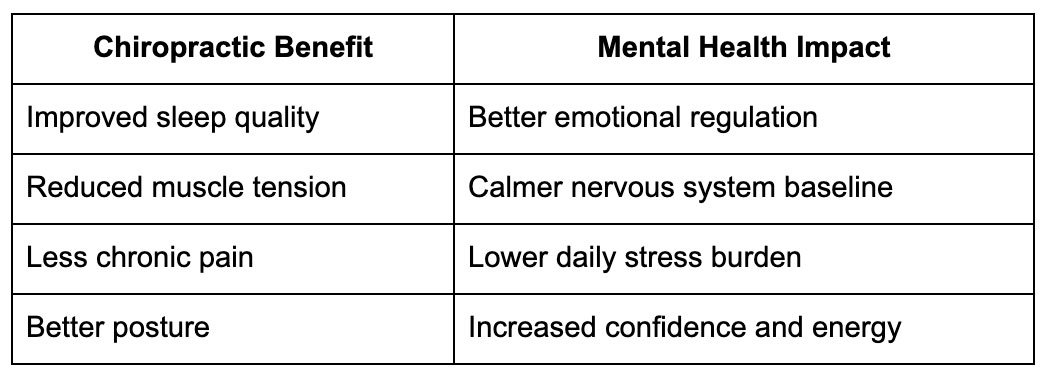
Who Can Benefit From This Approach
Chiropractic care for mental wellness isn’t one-size-fits-all – but certain groups consistently see meaningful results:
- Office workers carrying postural stress from long hours at a desk
- People with chronic tension or anxiety whose bodies are stuck in a constant state of “alert”
If you’ve been working on your mindset but your body is still wound tight, this could be the missing piece.
Real Mental Health Support Goes Beyond Just Talking
There’s no single path to better mental health. The most effective approach is usually a combination – movement, reflection, connection, creativity, and yes, taking care of your physical body too.
If you’re looking to improve your mental health holistically and want to explore how spinal health fits into that picture, we’d love to talk.
At Zen Care Chiropractic, our team – led by Dr. Jay Kang, your trusted Chiropractor Irvine – takes a whole-body approach to wellness. We’ll evaluate where you are and build a care plan that supports both your physical and mental wellbeing.
Zen Care Chiropractic – Irvine, CA, book your consultation today and take the first step toward feeling like yourself again.
See more: How Chiropractic Care Can Improve Your Mental Health