
Blogs
Scoliosis in Adults: What Causes It and How Is It Treated?
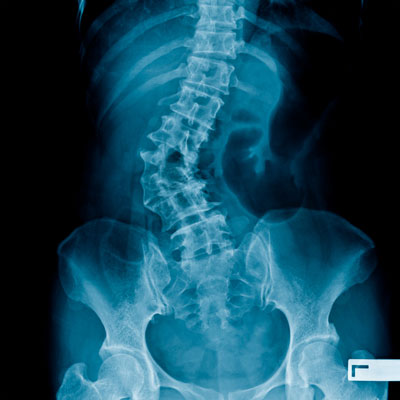
Scoliosis in adults may begin during adolescence and continue into adulthood, or develop later as the discs and joints of the spine change with age. The cause and symptoms can vary, so understanding the type of scoliosis and how it affects your movement is important when considering care.
At Zen Care Physical Medicine in Irvine, we evaluate posture, spinal alignment, movement, and symptoms to better understand how scoliosis may be affecting you.
Types of scoliosis in adults and how they develop
Scoliosis is a sideways curve of the spine that also involves some degree of spinal rotation. On an X-ray, the curve may resemble an S or C shape. A curve greater than 10 degrees is generally considered scoliosis.
In adults, the condition usually falls into one of two main patterns.
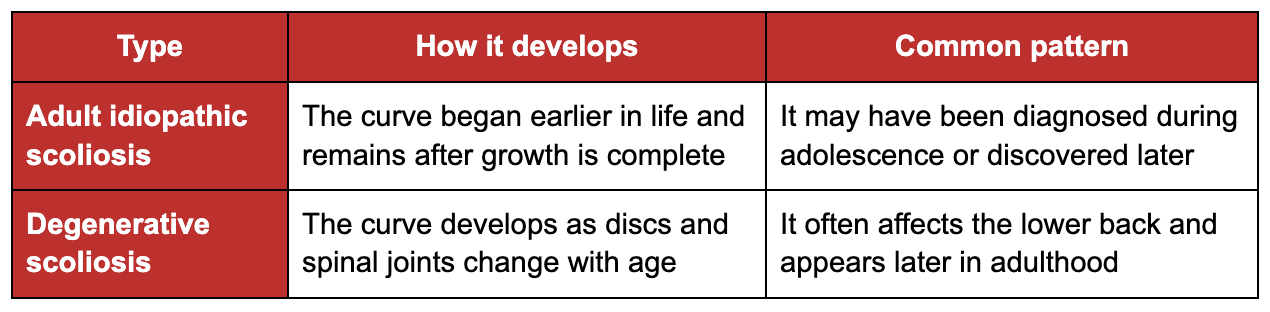
Adult degenerative scoliosis can develop as the discs and joints of the spine change with age. Uneven wear may gradually affect spinal alignment and contribute to the development of a curve.
Scoliosis is also different from poor posture. Slouching or sitting unevenly may change how your body looks and feels, but structural scoliosis involves an actual curve and rotation of the spine.
Why scoliosis may develop or progress with age
Someone who has lived with scoliosis since adolescence may go years without major symptoms. The curve is still present, but changes in strength, mobility, discs, and joints can make it more noticeable later.
For other adults, there was no scoliosis earlier in life. Instead, age related changes occur unevenly across the spine. If one side of a disc or joint changes more than the other, the spine can gradually tilt and develop a curve.
Several factors may influence adult spinal alignment, including:
- Disc degeneration.
- Arthritis in the spinal joints.
- Changes in bone health.
- Loss of muscle strength and conditioning.
- Previous spinal conditions or surgery.
This also explains why scoliosis can sometimes progress with age. However, progression is not automatic. The size and location of the curve, spinal balance, degeneration, bone health, and other individual factors all matter.
Common signs and symptoms of scoliosis in adults
Some adults discover scoliosis on an X-ray without having significant pain. Others first notice that their posture looks different or that standing and walking have become less comfortable.
Postural changes
Visible signs can include:
- One shoulder sitting higher than the other.
- Uneven hips or waist.
- Leaning toward one side.
- One shoulder blade appeared more prominent.
- Clothing hanging unevenly.
Pain and physical symptoms
Adult scoliosis may also be associated with:
- Back pain or stiffness.
- Muscle fatigue after prolonged standing or walking.
- Reduced spinal mobility.
- Difficulty walking longer distances.
- Pain that travels into the buttock or leg.
- Numbness, tingling, or weakness when nerves are affected.
Pain does not always match the size of the curve. A person with a larger curve may have relatively few symptoms, while another person with a smaller curve may experience pain because of degeneration, nerve irritation, or other problems occurring alongside scoliosis.
How scoliosis in adults is evaluated and diagnosed
Evaluating scoliosis involves more than identifying a curve in the spine. The goal is to understand the curve itself and how it may relate to your symptoms, movement, balance, and nerve function.
The evaluation typically begins with a health history and physical examination. This may include checking shoulder and hip alignment, posture, spinal mobility, balance, and movement. If you have leg pain, numbness, or weakness, strength, sensation, and other neurological signs may also be assessed.
Standing X-rays can be used to evaluate the shape and alignment of the spine. The curve is commonly measured using the Cobb angle, which describes its size in degrees. MRI or CT imaging may be considered when symptoms suggest that the nerves or other spinal structures need a closer look.
The Cobb angle provides useful information, but it is only one part of the evaluation. Symptoms, function, curve progression, nerve involvement, and overall health all help guide the next steps in care.
Treatment options for scoliosis in adults
There is no single treatment plan for every adult with scoliosis. In fact, many adults with degenerative scoliosis who do not have disabling symptoms can be managed without surgery.
The goal of care depends on what is causing difficulty in everyday life.
Exercise and conservative care
Exercise can help maintain strength, flexibility, and physical function. A program may focus on the core, back, hips, and other muscles that support movement and balance.
Staying active within a comfortable range is generally more useful than avoiding movement because a curve is present. Exercise should be adjusted when a particular movement consistently increases pain or neurological symptoms.
Conservative care may also include activity changes and other strategies for managing pain based on the person’s health and examination findings.
Chiropractic and corrective care
Some adults may consider chiropractic care as part of a conservative approach to managing mechanical back discomfort, restricted movement, or posture related concerns.
At Zen Care, corrective chiropractic care may include spinal adjustments, exercises, posture focused care, and traction when appropriate for the individual. The approach depends on examination and imaging findings rather than assuming every spinal curve should be treated the same way.
Scoliosis is also different from the more general effects of spinal misalignments, so identifying what is actually contributing to the symptoms is important before choosing a care plan.
Conservative chiropractic care should not be presented as a guaranteed way to make every structural adult scoliosis curve disappear. Goals and expected outcomes depend on the type of scoliosis and the individual case.
Managing scoliosis with nerve symptoms
Adult scoliosis can occur alongside disc degeneration and narrowing of the spaces around spinal nerves. When a nerve becomes irritated or compressed, symptoms may extend beyond the back.
Leg pain, numbness, tingling, or weakness may indicate that nerve involvement needs to be considered as part of the evaluation.
Treatment in this situation should address the neurological findings and their underlying cause rather than focusing only on posture or the appearance of the curve.
When surgery may be considered
Surgery is not the default treatment for scoliosis in adults.
A spinal specialist may consider surgery when there is disabling back or leg pain, significant spinal imbalance, major loss of function, progressive neurological problems, or symptoms that remain severe despite appropriate conservative treatment.
Managing scoliosis in everyday life
Daily habits cannot erase a structural curve, but they can influence how your back feels and how well you stay active.
Try changing positions regularly instead of forcing yourself to hold one supposedly perfect posture all day. Long periods of sitting or standing can increase stiffness and fatigue for some people.
Regular walking and other comfortable physical activities can help maintain conditioning. Strength work should be introduced gradually and adjusted to your ability and symptoms.
Your work setup matters as well. Prolonged sitting can contribute to muscle tension and postural strain, so taking movement breaks and improving ergonomics can reduce unnecessary stress. Zen Care discusses these strategies further in its article on sitting all day and your posture.
Most importantly, pay attention to changes rather than simply trying to make your posture look perfectly symmetrical.
Taking the next step with adult scoliosis
Managing scoliosis in adulthood is not simply about chasing a curve on an X-ray. The more useful goal is to understand how your spine is functioning and whether the condition is affecting comfort, mobility, nerves, or everyday activities.
At Zen Care Physical Medicine in Irvine, we evaluate posture, spinal mechanics, movement, and symptoms to determine whether conservative chiropractic and corrective care may be appropriate. When findings suggest that another type of medical or specialist evaluation is needed, that should be considered as part of the care plan.
If you have noticed changes in your posture or symptoms and want to understand what may be happening, contact us to schedule an evaluation.
Frequently asked questions
Can you develop scoliosis for the first time as an adult?
Yes. Degenerative scoliosis can first develop during adulthood as discs and spinal joints change unevenly with age. This is different from adult idiopathic scoliosis, which began earlier in life.
Is walking good for adults with scoliosis?
Walking is a low impact activity that can help maintain movement and general conditioning for many adults with scoliosis. The amount should be adjusted if walking significantly increases back or leg symptoms.
Can adult scoliosis be corrected without surgery?
Conservative treatment may help improve pain, strength, mobility, and function without surgery. However, the amount of structural curve change that is possible varies, and treatment should not promise that every adult curve can be completely straightened.
Can adult scoliosis cause sciatica?
It can contribute to sciatica like symptoms in some people. Degenerative changes associated with adult scoliosis may narrow the spaces around spinal nerves, resulting in pain, tingling, numbness, or weakness in the leg.