
Blogs
How to Prevent Sports Injuries: 7 Professional Tips from an Irvine Sports Chiropractor
Understanding how to prevent sports injuries requires more than just “warming up” and “stretching.” It demands a strategic approach addressing biomechanics, training progression, and structural alignment that most athletes overlook until pain forces them to stop.
At Zen Care Chiropractic in Irvine, we work with weekend warriors, competitive athletes, and sports parents who want their families performing at their best without constant setbacks. These seven professional tips will help you stay active, healthy, and injury-free.
1. Prioritize Dynamic Warm-Ups Over Static Stretching
Stop holding stretches before your workout. That old-school approach of touching your toes for 30 seconds? It’s outdated and potentially counterproductive.
Why static stretching before activity doesn’t work: Cold muscles and tendons don’t respond well to prolonged stretching. You’re essentially trying to stretch rubber bands straight from the freezer – they’re stiff, resistant, and vulnerable to strain.
Dynamic warm-up benefits:
- Increases blood flow to muscles
- Activates nervous system for movement
- Improves range of motion functionally
- Prepares joints for sport-specific patterns
- Reduces injury risk significantly
Effective dynamic warm-up sequence:
- Light cardio (5 minutes): Jogging, jumping jacks, or cycling
- Movement-based stretches: Leg swings, arm circles, torso rotations
- Sport-specific drills: Gradual intensity increase mimicking your activity
2. Ensure Proper Spinal Alignment for Biomechanical Balance
Here’s what most athletes miss: sports injuries often stem from hidden structural imbalances, not just training errors or bad luck.
The biomechanical cascade: When your spine is misaligned, your body compensates. One hip sits higher, forcing the opposite knee to absorb extra stress. Your shoulders rotate unevenly, creating asymmetric force through your throwing arm. These compensations work short-term – until they don’t.
Common compensation patterns leading to injury:
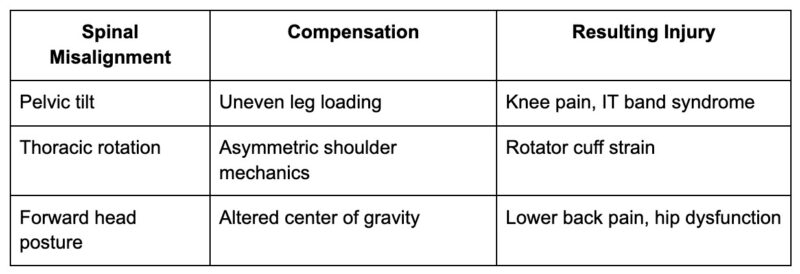
This is why how to prevent sports injuries must include structural assessment. You can have perfect technique, but if your foundation is crooked, something will eventually break down.
Regular corrective chiropractic care identifies and fixes these imbalances before they create overuse injuries.
3. Gradual Loading: The 10% Rule
“Too much, too soon” is the most common cause of sports injuries we see at our chiropractor Irvine practice. Enthusiasm outpaces adaptation, and tissues can’t keep up.
The 10% rule: Increase training intensity, duration, or volume by no more than 10% per week. This allows joints, ligaments, tendons, and bones time to adapt to new demands.
Why gradual progression matters:
- Tendons strengthen slower than muscles
- Bone remodeling takes weeks to months
- Nervous system needs time to establish new patterns
- Recovery capacity must match training load
4. Focus on “Pre-hab” Strength Training
Don’t just train for power and speed – train for stability and injury resistance. “Pre-hab” strengthens the stabilizing muscles that protect your joints during dynamic movements.
Critical pre-hab focus areas:
Core stability:
- Planks and anti-rotation exercises
- Dead bugs and bird dogs
- Pallof presses
Glute activation:
- Clamshells and monster walks
- Single-leg bridges
- Lateral band walks
Why this matters: Weak glutes force your lower back and knees to compensate during running, jumping, and cutting movements. Strong glutes stabilize your pelvis, protecting both your spine and lower extremity joints.
5. Use Sport-Specific Protective Gear & Footwear
Worn-out shoes change your gait mechanics, creating ripple effects throughout your kinetic chain. We see this constantly in our Irvine clinic – shin splints, hip pain, and lower back issues tracing back to shoes that should have been replaced months ago.
Visual wear indicators:
- Uneven sole wear patterns
- Compressed midsole cushioning
- Visible creasing in upper material
- Loss of support structure
Beyond shoes, sport-specific protective gear isn’t optional – it’s insurance. Helmets, mouthguards, knee pads, and wrist guards prevent catastrophic injuries that end seasons or create permanent damage.
6. Listen to “Micro-Pain” Signals
There’s a difference between “good” muscle soreness from hard training and “bad” pain signaling tissue damage or dysfunction.
Good pain (DOMS – Delayed Onset Muscle Soreness):
- Dull, achy feeling in muscle bellies
- Appears 24-48 hours post-workout
- Improves with light activity
- Resolves within 72 hours
Bad pain (injury signals):
- Sharp, localized pain in joints
- Shooting or radiating sensations
- Numbness or tingling
- Pain worsening with continued activity
- Persisting beyond 3 days
Critical mistake: Masking pain with ibuprofen or other NSAIDs to push through workouts. This doesn’t fix the problem – it silences the alarm while damage accumulates.
If micro-pain appears, address it immediately with rest, ice, and evaluation. Ignoring early signals leads to major injuries requiring months of recovery.
7. Schedule Regular Maintenance & Corrective Adjustments
Your car needs alignment checks. So does your body – especially if you’re asking it to perform at high levels consistently.
What maintenance chiropractic provides:
- Identifies biomechanical imbalances before injury
- Maintains optimal joint mobility
- Prevents compensation patterns
- Optimizes nervous system function
- Keeps muscles and fascia properly balanced
Recommended maintenance frequency:
- Recreational athletes: Monthly adjustments
- Competitive athletes: Bi-weekly during season
- High-volume trainers: Weekly during peak training blocks
This isn’t about treating pain – it’s about preventing it. Athletes who maintain regular corrective care experience fewer injuries and faster recovery when minor issues do arise.
Stay Active, Stay Healthy: Your Injury Prevention Plan
Learning how to prevent sports injuries requires integrating multiple strategies – proper warm-ups, structural alignment, progressive loading, pre-hab training, appropriate gear, pain awareness, and maintenance care.
At Zen Care Chiropractic, we specialize in keeping Irvine’s active community performing at their peak. Whether you’re training for a marathon, playing competitive tennis, or keeping up with your kids’ sports schedules, we provide the structural foundation that prevents injuries before they happen.
Schedule a comprehensive sports injury prevention assessment at Zen Care Chiropractic today. We’ll evaluate your biomechanics, identify potential injury risks, and create a personalized maintenance plan keeping you active and pain-free. Don’t wait for injury to stop you – prevent it before it starts.
See more: Common Sports Injuries Chiropractors Can Help Treat