
Blogs
How Long After a Car Accident Can Injuries Appear?

How long after a car accident can injuries appear? While some injuries surface immediately, others – like whiplash, concussions, or even internal damage – can sneak up silently, hidden beneath the effects of adrenaline or masked by shock.
In this article, we’ll explore why symptoms are often delayed, what signs to watch for, and how chiropractic care can play a vital role in early detection, treatment, and long-term recovery.
Why Injuries Don’t Always Show Up Immediately
Your body has remarkable ways of protecting itself during trauma. When you’re in a car accident, several biological processes kick in that can mask injury symptoms for hours, days, or even weeks.
During an accident, your body floods with adrenaline and cortisol – powerful stress hormones that prepare you for “fight or flight”. These chemicals are incredibly effective at blocking pain signals and keeping you alert during emergencies.
Meanwhile, your nervous system goes into protective mode. This psychological shock can delay symptom recognition as your brain focuses on immediate survival rather than processing pain signals from injured tissues.
See more: Car Accidents & Chiropractic
The Hidden Development of Microtrauma
Not all injuries are dramatic tears or breaks. Many car accident injuries involve microtrauma – tiny tears in muscles, ligaments, and other soft tissues that don’t cause immediate pain.
These microscopic injuries trigger an inflammatory response as your body begins the healing process. However, inflammation takes time to develop and reach levels that cause noticeable symptoms. What starts as minor tissue damage can become significant pain and stiffness within 24 to 72 hours.
How Long After a Car Accident Can Symptoms Appear?
The timeline for symptom development varies significantly depending on the type of injury and individual factors like age, fitness level, and pre-existing conditions. Here’s what we typically see in our practice:
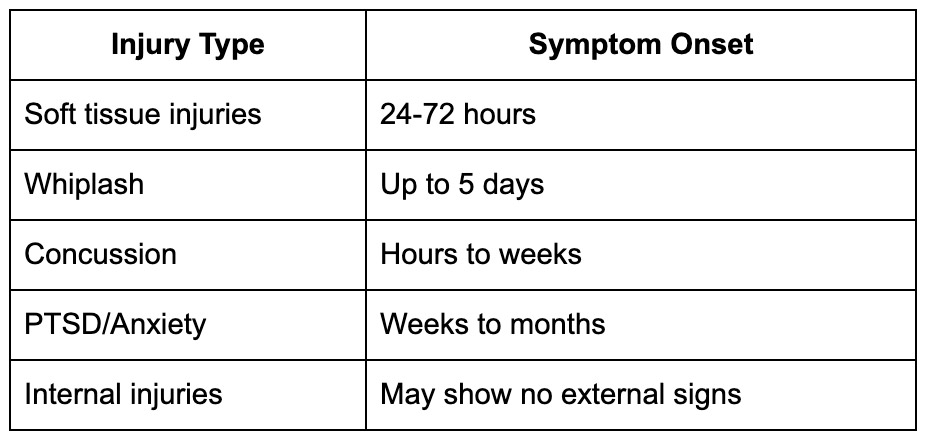
This timeline variability is exactly why early chiropractic evaluation is so important. We can identify problems before they become symptomatic and implement treatment strategies that prevent minor injuries from becoming major complications.
The Most Common Delayed Symptoms After a Car Accident
1. Whiplash: The Silent Injury
Whiplash is perhaps the most common delayed injury we treat. The rapid back-and-forth motion of the head during impact can damage muscles, ligaments, and joints in the cervical spine without causing immediate pain.
Patients typically notice delayed stiffness, pain, and limited range of motion that often worsens after periods of rest. You might wake up the morning after an accident feeling like you can barely turn your head, even though you felt fine the day before.
Dr. Arthur Croft’s research through the Spine Research Institute shows that whiplash symptoms peak between 48 to 72 hours after injury in most patients, explaining why many people feel progressively worse rather than better in the first few days.
2. Headaches and Signs of Concussion
Post-accident headaches can develop even without direct head impact. The same forces that cause whiplash can also affect the brain, leading to concussion symptoms that may not appear immediately.
Watch for blurred vision, nausea, sensitivity to light, difficulty concentrating, or changes in sleep patterns. These symptoms can occur hours to weeks after the accident and shouldn’t be dismissed as “just stress.”
3. Neck and Shoulder Pain
Beyond whiplash, car accidents commonly cause muscle strain and disc herniation in the cervical spine. These injuries can create nerve root irritation that radiates pain into the shoulders, arms, and even hands.
The pain often starts as a vague ache and gradually intensifies as inflammation increases around injured structures.
4. Back Pain: More Than Just Soreness
Lower back pain after car accidents frequently results from inflammation in joints and discs. The jarring motion of impact can misalign vertebrae and create pressure on sensitive nerve structures.
This type of pain may cause radiating symptoms down the legs, numbness, or weakness. What starts as minor discomfort can quickly escalate to debilitating pain if the underlying spinal misalignment isn’t corrected.
5. Numbness, Tingling, or Weakness
These neurological symptoms indicate nerve compression, often resulting from whiplash or spinal misalignment. The delayed onset occurs as inflammation around injured tissues increases pressure on nerve pathways.
6. Emotional and Cognitive Symptoms
The psychological impact of car accidents often goes unrecognized until weeks after the event. Irritability, insomnia, depression, and anxiety are common responses to trauma that may not surface immediately.
These symptoms can significantly impact your quality of life and recovery from physical injuries. Addressing them as part of comprehensive care improves overall treatment outcomes.
How Chiropractic Care Helps with Delayed Injury Recovery
Chiropractic care offers unique advantages for treating car accident injuries, especially those with delayed symptom onset. Our approach focuses on identifying and correcting problems before they become chronic.
Non-Invasive, Drug-Free Treatment
Rather than masking symptoms with medication, we address the root cause of pain and dysfunction. This approach promotes genuine healing rather than temporary relief.
Restoring proper spinal alignment allows your body’s natural healing mechanisms to work more effectively. When vertebrae are properly positioned, inflammation decreases, nerve function improves, and tissues can repair themselves more efficiently.
Preventing Chronic Pain and Degeneration
Early chiropractic intervention can prevent minor injuries from developing into chronic pain conditions.
By addressing spinal misalignments and muscle imbalances promptly, we can prevent the development of scar tissue and joint degeneration that often lead to persistent problems.
Supporting Nervous System Function
The nervous system controls every function in your body, including healing and pain perception. When spinal alignment is compromised, it can interfere with brain-body communication and slow recovery.
Chiropractic adjustments restore proper nervous system function, allowing your body to coordinate the healing process more effectively and reducing the likelihood of chronic symptoms.
Don’t Let Hidden Injuries Linger
The key message we want every car accident victim to understand is this: delayed pain doesn’t mean minor pain. Your body is remarkably good at sending warning signs when something is wrong – the challenge is recognizing and responding to those signals appropriately.
Many of the chronic pain conditions we treat could have been prevented with early intervention. The patient who comes to us six months after an accident with severe headaches and neck pain often wishes they had sought care immediately, even when they felt fine initially.
At Zen Care in Irvine, we understand the complex nature of accident-related injuries and know how to identify problems before they become chronic. The investment in early evaluation and treatment pays dividends in faster recovery, reduced pain, and better long-term outcomes.
Your body has an incredible ability to heal when given the right support. Let us help you tap into that natural healing power and get back to living your life without pain or limitation. Schedule an appointment today with our experts!