
Blogs
Can Poor Posture Cause Headaches? What Most People Overlook

You’re sitting at your desk. Three hours pass. Suddenly, a headache creeps in.
You blame stress. You blame allergies. You might blame your job. But what if the real culprit was hiding in plain sight – in how you’re sitting?
Can poor posture cause headaches? The short answer is yes. But here’s what most people miss: not all headaches are posture-related. Understanding the connection can change how you address recurring pain.
Yes – Poor Posture Can Trigger Headaches
Poor posture doesn’t always cause headaches. But posture problems can contribute to certain types:
- Tension headaches – the most common type, often from muscle tightness
- Cervicogenic headaches – originating from the neck and upper spine
- Muscle-related symptoms – pain patterns that travel beyond the neck
Research published in the Journal of Physical Therapy Science shows that forward head posture is significantly associated with tension-type headaches and neck pain. The mechanics are straightforward: your body position directly affects muscle strain and nerve function.
See more: 5 Ways to Control Migraine Headaches
How Poor Posture Triggers Headaches
Forward Head Posture Increases Neck Stress
Your head weighs 10–12 pounds. Balanced directly over your shoulders, that’s manageable. But shift it forward 2–3 inches, and your neck muscles suddenly work 10 times harder.
This forward position is extremely common. Laptops, phones, and desk work train your head into this strained position. Over hours, the cumulative stress builds.
Muscle Tension and Trigger Points
Sustained tension creates knots in muscles – “trigger points”. These tight areas refer pain upward, often to the back of the head, temples, or behind the eyes.
The upper neck and shoulder muscles (trapezius, sternocleidomastoid) are particularly prone to this. When tight, they create referred pain patterns people often mistake for other headache types.
Referred Pain Can Travel Beyond the Neck
Pain doesn’t always stay where the problem starts. Muscle tension in your neck can create sensations in your head, temples, or behind your eyes.
This is called referred pain. Your nervous system projects sensation to areas distant from the actual source. Understanding this prevents you from treating the wrong problem.
Why Headaches Often Show Up Hours Later
The delayed timing confuses people. You’re fine during work. The headache arrives hours later – even into the evening.
This happens because muscle fatigue accumulates throughout the day. Tension builds gradually. Eventually, your nervous system registers the strain as pain. By then, you’ve forgotten what triggered it.
Signs Your Headaches May Be Posture-Related
Posture-related headaches typically show these patterns:
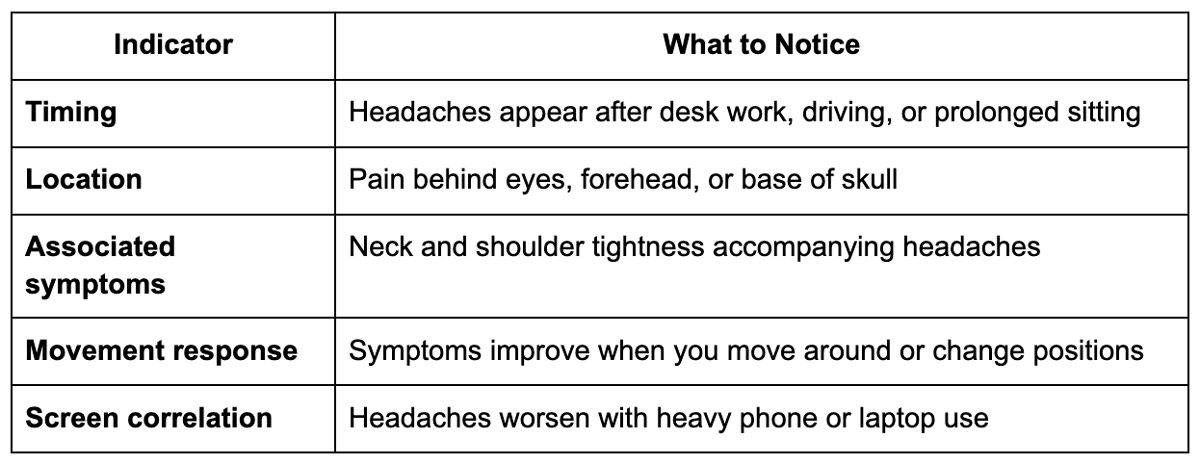
If multiple indicators match your experience, posture may be contributing.
Daily Habits Quietly Creating Problems
Phone Use and Tech Neck
Looking down at your phone drops your head forward. Multiply that by dozens of times daily, and you’ve trained your entire posture into forward head position.
This is called “tech neck” – a modern epidemic contributing to headaches, neck pain, and tension.
Laptop and Workstation Setup
Working from a laptop on your lap or desk requires hunching. Your screen is too low. Your keyboard forces awkward arm angles. Eight hours daily in this position creates significant strain.
Working from Couches or Beds
Home offices sometimes mean informal setups. A couch or bed might feel comfortable momentarily, but it forces your spine into unnatural positions. Cumulative strain builds quickly.
Long Commutes
Driving with poor posture – head forward, shoulders hunched – creates the same strain. Hours commuting compounds the problem.
Sleep Position Habits
How you sleep matters. Sleeping with too many pillows or on your stomach can strain your neck throughout the night. Morning headaches often stem from poor sleep positioning.
Why Posture Headaches Get Misdiagnosed
People often attribute posture-related headaches to:
- Migraines – when tension headaches might actually be the issue
- Sinus headaches – when neck tension is the real cause
- Eye strain – when posture is the primary factor
- Stress headaches – partially true, but posture amplifies stress-related tension
This misidentification prevents people from addressing the actual cause. If you treat “sinus” headaches with medication when posture is the problem, you’ll remain frustrated and in pain.
At Zen Care Physical Medicine, our team including Dr. Jay Kang frequently evaluates posture and movement patterns that may be driving recurring headaches – often catching what others miss.
What You Can Start Doing Today
Take Movement Breaks
Every 30 minutes, stand up. Stretch. Move your neck through gentle ranges. Movement interrupts the accumulation cycle.
Adjust Screen Height
Your screen should be at eye level. This alone can dramatically reduce forward head posture and related tension.
Improve Workstation Setup
- Monitor arm’s length away
- Keyboard and mouse at elbow height
- Desk height allowing 90-degree elbows
- Chair supporting natural spine curves
Build Posture Awareness
Periodically check: Where is your head positioned? Are your shoulders creeping up? Small corrections throughout the day prevent accumulation.
Strengthen Neck Support
Targeted exercises strengthen muscles supporting proper posture, reducing strain and headache frequency.
When Headaches Should Not Be Ignored
While most posture-related headaches aren’t serious, certain warning signs demand immediate attention:
Seek urgent care if you experience:
- Sudden, severe headache (worst of your life)
- Vision changes or eye pain
- Numbness or tingling in arms/hands
- Dizziness or loss of balance
- Weakness or coordination problems
- Headache with fever or stiff neck
- Change in headache pattern or severity
These suggest something beyond posture issues – possibly requiring imaging or specialist evaluation.
The Bigger Picture
Headaches aren’t always “just stress”. Sometimes daily posture habits – repeated hundreds of times – create patterns people overlook completely.
Your body doesn’t separate problems into neat categories. Poor posture creates muscle tension. Muscle tension creates referred pain. Referred pain shows up as headaches. But unless you identify the posture component, you keep treating the symptom, not the cause.
Understanding the source is often the first step toward meaningful relief.
If you’re experiencing recurring headaches and suspect posture may be involved, assessment can help clarify. Understanding whether posture is contributing and how significantly – helps determine the right approach.
Zen Care Physical Medicine offers comprehensive evaluations identifying whether posture, movement patterns, or structural factors are involved in your headaches.
Interested in understanding your headaches better? Contact us now!
This article is educational and does not replace professional medical advice. Consult a healthcare provider about persistent or worsening symptoms.
References:
- Kim, D. H., et al. (2018). “Text Neck Syndrome in Orthodontic Patients.” Journal of Physical Therapy Science, 30(4), 549–552.
- Bronfort, G., et al. (2012). “Efficacy of spinal manipulation and mobilization for cervicogenic headache.” Spine, 39(22), 1519–1531.
FAQs
Can posture really cause headaches?
Yes, in many people. Posture-related headaches are common, especially among office workers and heavy phone users.
How long does it take to improve posture headaches?
Depends on severity and consistency. Some people notice improvement within days of ergonomic changes. Structural correction takes longer.
Are posture headaches permanent?
No. They typically resolve when posture improves and muscle tension decreases. Prevention involves maintaining awareness and ergonomics.
Can chiropractors help with posture headaches?
A chiropractor in Irvine specializing in posture correction can assess whether structural or movement factors are contributing and develop a correction plan.
Should I see a doctor for posture headaches?
If headaches are mild and clearly linked to posture, ergonomic changes may be sufficient. If severe, worsening, or accompanied by other symptoms, professional evaluation is wise.