
Blogs
10 Root Causes of Fibromyalgia: What’s Really Behind Chronic Pain and Fatigue

Understanding the 10 root causes of fibromyalgia doesn’t just validate what you’re experiencing – it empowers you to address the underlying problems, not just mask symptoms. We believe that real healing starts with understanding what’s really going on in your body.
Fibromyalgia isn’t one single problem. It’s a complex condition with multiple contributing factors, often working together to create the pain and fatigue you experience daily. Let’s break down each root cause so you can finally understand the “why” behind what you’re feeling.
1. Central Nervous System Sensitization
Your nervous system has essentially turned up the volume on pain signals. What should register as mild pressure or normal sensation gets interpreted by your brain as intense pain.
What’s happening: Research by Dr. Clauw, published in JAMA, demonstrates that fibromyalgia patients show heightened pain processing in the central nervous system. Your pain pathways have become hypersensitive, amplifying normal sensory input into painful experiences.
2. Genetic Predisposition
Fibromyalgia often runs in families, suggesting a genetic component that influences how your body processes pain and stress.
Key factors:
- First-degree relatives of fibromyalgia patients have an 8-fold increased risk
- Genetic variations affect neurotransmitter function
- Inherited differences in pain perception and stress response
This doesn’t mean fibromyalgia is inevitable if it runs in your family – but it does mean you may be more susceptible when other triggers are present.
3. Neurotransmitter Imbalances
Your brain relies on chemical messengers called neurotransmitters to regulate pain, mood, sleep, and energy. In fibromyalgia, these systems often malfunction.
Common imbalances:
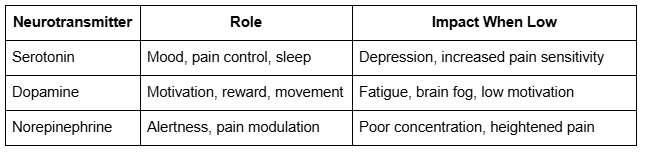
These imbalances create a biochemical environment where pain is amplified and recovery mechanisms are suppressed.
4. Chronic Stress and HPA Axis Dysfunction
Your hypothalamic-pituitary-adrenal (HPA) axis controls your stress response. In fibromyalgia, this system often becomes dysregulated.
The stress connection: Chronic stress leads to abnormal cortisol patterns – either too high or too low at the wrong times. This dysregulation keeps your nervous system in a constant state of overload, making it impossible to properly rest and heal.
5. Childhood Trauma or Emotional Trauma
Adverse childhood experiences or significant emotional trauma can create long-lasting changes in how your nervous system processes pain and stress.
Why this matters: Trauma essentially “programs” your nervous system to stay on high alert. Research by Dr. Häuser in Arthritis & Rheumatology found significantly higher rates of childhood trauma among fibromyalgia patients compared to healthy controls.
Trauma and pain memory: Your nervous system can store trauma as physical memory, creating persistent pain patterns even after the original threat is long gone.
6. Physical Trauma or Injury
Car accidents, falls, surgeries, or repetitive strain injuries can trigger fibromyalgia in susceptible individuals.
What happens: The initial injury heals, but the pain pathways never fully “reset”. Your nervous system remains stuck in a protective, hypersensitive state. This is especially common after whiplash injuries or significant physical trauma.
7. Infections or Immune System Triggers
Certain infections appear to trigger fibromyalgia in some people, possibly through immune system activation that affects neurological function.
Common triggers:
- Epstein-Barr virus (mono)
- Lyme disease
- Viral illnesses like COVID-19
- Hepatitis C
The infection itself may resolve, but the immune response can leave lasting changes in pain processing and nervous system sensitivity.
8. Sleep Disturbances and Non-Restorative Sleep
Poor sleep doesn’t just result from fibromyalgia – it’s often a root cause that perpetuates the condition.
The sleep-pain loop: Fibromyalgia patients often lack deep, restorative Stage 4 sleep. Without this crucial sleep stage, your body can’t properly repair tissues, regulate pain, or restore energy. Poor sleep amplifies pain, which worsens sleep, creating a vicious cycle.
9. Autonomic Nervous System Dysregulation
Your autonomic nervous system controls automatic functions like heart rate, digestion, and temperature regulation. In fibromyalgia, this system often gets stuck in “fight or flight” mode.
Sympathetic dominance symptoms:
- Digestive issues (IBS, nausea)
- Temperature sensitivity (always too hot or too cold)
- Chronic fatigue despite rest
- Racing heart or dizziness
This constant state of sympathetic activation prevents your body from entering the parasympathetic “rest and digest” mode necessary for healing.
10. Structural Imbalances and Poor Spinal Function
This is often the most overlooked among the root causes of fibromyalgia – but it’s one we address directly at Zen Care Chiropractic.
How posture affects pain: Poor spinal alignment creates chronic nerve irritation and reduces communication efficiency between your brain and body. When your spine isn’t functioning optimally, your nervous system can’t regulate pain properly.
Why corrective chiropractic care matters: As your chiropractor Irvine, we focus on restoring proper spinal function to support better nervous system regulation. This doesn’t cure fibromyalgia, but it removes one significant barrier to your body’s ability to manage pain and heal.
How Corrective Chiropractic Care Fits Into Fibromyalgia Management
At Zen Care Chiropractic, we approach fibromyalgia as a nervous system condition that benefits from structural support.
What chiropractic care addresses:
- Nervous system regulation through spinal adjustments
- Improved alignment reducing mechanical stress
- Enhanced brain-body communication
- Decreased sympathetic nervous system overactivity
Important clarification: Chiropractic care is complementary – not a cure, not a replacement for medical care. It works best as part of a comprehensive approach that may include medication, sleep hygiene, stress management, gentle exercise, and nutritional support.
See more: How Chiropractic Care Can Help Address Fatigue and Fibromyalgia
Final Thoughts: Understanding the “Why” Behind Fibromyalgia
Learning about the 10 root causes of fibromyalgia does something powerful – it validates your experience. You’re not crazy. Your pain is real. And there are legitimate, identifiable reasons why you feel the way you do.
You deserve answers, not dismissal. Understanding these root causes empowers you to pursue targeted treatments that address what’s actually wrong, rather than just covering up symptoms.
Multiple causes require multiple solutions. Fibromyalgia rarely has just one trigger. That’s why effective treatment often requires an integrative approach addressing several root causes simultaneously.
At Zen Care Chiropractic in Irvine, CA, we’re committed to being part of your healing team – supporting your nervous system through structural care while you address other contributing factors.
Ready to explore how chiropractic care can support your fibromyalgia management? Schedule a consultation to discuss your symptoms and treatment options
You deserve care that understands the complexity of what you’re experiencing. Let’s work together toward real, lasting relief.